Picture This

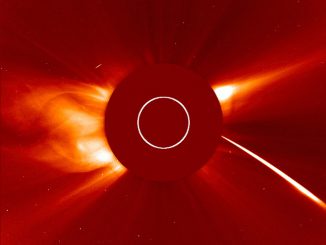
SOHO sees bright sungrazer comet

ESA and NASA’s Solar and Heliospheric Observatory, or SOHO, saw a bright comet plunge toward the Sun on 3-4 August 2016, at nearly 1.3 million miles per hour. The comet, first spotted by SOHO on 1 August, is part of the Kreutz family of comets, a group with related orbits that broke off of a huge comet several centuries ago.

News

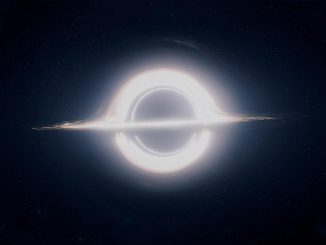
Do black holes have a back door?

The laws of physics as we know them cease to apply to black holes in their deepest regions. Large quantities of matter and energy concentrate in a gravitational singularity, where space-time curves towards infinity and all matter is destroyed. Or is it? A recent study suggests that matter might in fact survive its foray into these space objects and come out the other side.

News

Dawn’s gravity data probes interior of dwarf planet Ceres

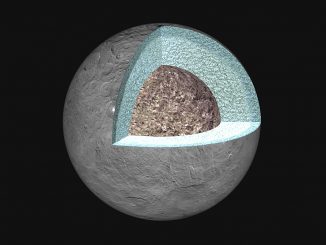
By tracking subtle changes in the motion of NASA’s Dawn spacecraft, scientists have mapped the variations in Ceres’ gravity for the first time, providing clues to the dwarf planet’s internal structure. The new data suggest that Ceres has a weak interior, and that water and other light materials partially separated from rock during a heating phase early in its history.

News

A giant stellar void in the Milky Way

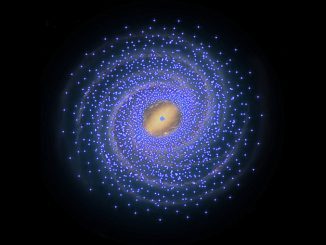
A major revision is required in our understanding of the Milky Way Galaxy according to an international team led by Professor Noriyuki Matsunaga of the University of Tokyo. The Japanese, South African and Italian astronomers found a huge region around the centre of our own galaxy which is devoid of young stars.

Picture This

Hubble captures an ancient cosmic cluster

Located some 22,000 light-years away in the southern constellation of Musca (The Fly), this tightly packed collection of stars — known as a globular cluster — goes by the name of NGC 4833. Globular clusters are thought to contain some of the oldest stars in our galaxy. This NASA/ESA Hubble Space Telescope image shows the dazzling stellar group in all its glory.