23 December 2025
Astronomy Now
  • Home
  • The Magazine
    • About
    • Current Issue
    • Subscribe
    • Renew Subscription
      • September last issue
      • August last issue
      • July last issue
  • AstroFest 2026
  • News
  • Observing
    • UK Sky Chart
    • Almanac
    • Scope Calc
    • DSLR Calc
  • Reviews
    • Equipment
    • Book Reviews
  • Spaceflight Now
  • Shop
  • Contact Us
    • Subscriptions
    • Your Views
    • Ask Astronomy Now
    • Editorial
    • Advertising
    • AstroListings
Latest News
  • [ 17 December 2025 ] Thank you from the editor News
  • [ 25 October 2025 ] Hubble revisits a cosmic yardstick News
  • [ 21 October 2025 ] Europe’s planet hunting spacecraft complete and ready for final testing News
  • [ 24 September 2025 ] Nova outburst in Centaurus News
  • [ 12 September 2025 ] Astronomy Now relaunches digital platform News
  • Twitter
  • Facebook

Live coverage: ExoMars orbiter safely arrives at Mars, lander’s fate uncertain

19 October 2016 Stephen Clark

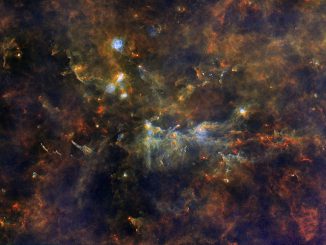
Live coverage of the ExoMars Trace Gas Orbiter and the Schiaparelli lander arriving at Mars. Text updates will appear automatically below; there is no need to reload the page. Follow us on Twitter.
  • European Space Agency
  • ExoMars
  • ExoMars 2016
  • Mars
  • Mission Status Center
  • Planetary Science
  • Schiaparelli
  • Trace Gas Orbiter

Related Articles

Observing

Elusive Mercury and dazzling Venus together as evening stars

2 January 2015 Mark Armstrong

Inner planets Mercury and Venus are currently approaching conjunction, low to the southwest horizon shortly after sunset. If you have an extra clear sky, then Mars completes the scene.

News

The dynamic duo: Jupiter’s independently pulsating X-ray aurorae

10 November 2017 Astronomy Now

Jupiter’s intense northern and southern lights, or aurorae, behave independently of each other according to a new study using NASA’s Chandra X-ray and ESA’s XMM-Newton observatories.

News

Meteorites delivered water ice to asteroids in early solar system

28 June 2016 Astronomy Now

Planetary scientists have discovered pieces of opal in a meteorite found in Antarctica, a result that demonstrates that meteorites delivered water ice to asteroids early in the history of the solar system. Opal, familiar on Earth as a precious stone used in jewellery, is made up of silica (the major component of sand) with up to 30 percent water in its structure.

Astronomy Now NewsAlert

Get the latest astronomical news and stargazing tips delivered to your inbox.

News Headlines

  • Thank you from the editor
    17 December 2025
  • Hubble revisits a cosmic yardstick
    25 October 2025
  • Europe’s planet hunting spacecraft complete and ready for final testing
    21 October 2025
  • Nova outburst in Centaurus
    24 September 2025
  • Astronomy Now relaunches digital platform
    12 September 2025
  • Home
  • The Magazine
    • About
    • Current Issue
    • Subscribe
    • Renew Subscription
      • September last issue
      • August last issue
      • July last issue
  • AstroFest 2026
  • News
  • Observing
    • UK Sky Chart
    • Almanac
    • Scope Calc
    • DSLR Calc
  • Reviews
    • Equipment
    • Book Reviews
  • Spaceflight Now
  • Shop
  • Contact Us
    • Subscriptions
    • Your Views
    • Ask Astronomy Now
    • Editorial
    • Advertising
    • AstroListings

© 2019 Pole Star Publications Limited

Astronomy Now