
2 April 2026
Astronomy Now
  • Home
  • The Magazine
    • About
    • Current Issue
    • Subscribe
    • Renew Subscription
  • AstroFest 2026
  • News
  • Observing
    • UK Sky Chart
    • Almanac
    • Scope Calc
    • DSLR Calc
  • Reviews
    • Equipment
    • Book Reviews
  • Spaceflight Now
  • Shop
  • Contact Us
    • Subscriptions
    • Your Views
    • Ask Astronomy Now
    • Editorial
    • Advertising
    • AstroListings
Latest News
  • [ 25 March 2026 ] Artificial Intelligence uncovers more than 100 new worlds in NASA data News
  • [ 24 March 2026 ] XRISM solves gamma-Cas’s 50-year X-ray mystery News
  • [ 16 March 2026 ] Molten lava world points to new class of planet Focus on
  • [ 26 January 2026 ] Dr Allan Chapman (1946-2026) News
  • [ 16 January 2026 ] Potentially bright ‘sungrazing’ comet discovered News
  • Facebook
  • Twitter
  • LinkedIn

Georgia Tech

News

Computer simulations shed light on Milky Way’s missing red giants

8 June 2016 Astronomy Now

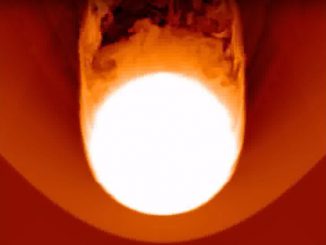
New computer simulations from the Georgia Institute of Technology provide a conclusive test for a hypothesis of why the centre of the Milky Way appears to be filled with young stars but has very few old ones. According to the theory, the remnants of older, red giant stars are still there — they just aren’t bright enough to be detected with telescopes.

Latest Issue

Astronomy Now Newsletter

Join our mailing list.
* indicates required
Which elements of Astronomy interest you?

News Headlines

  • Artificial Intelligence uncovers more than 100 new worlds in NASA data
    25 March 2026
  • XRISM solves gamma-Cas’s 50-year X-ray mystery
    24 March 2026
  • Molten lava world points to new class of planet
    16 March 2026
  • Dr Allan Chapman (1946-2026)
    26 January 2026
  • Potentially bright ‘sungrazing’ comet discovered
    16 January 2026

© 2019 Pole Star Publications Limited

Astronomy Now