News


An unknown, unseen “planetary mass object” may lurk in the outer reaches of our solar system, according to new research on the orbits of minor planets to be published in the Astronomical Journal. This object would be different from — and much closer than — the so-called Planet Nine, a planet whose existence yet awaits confirmation.
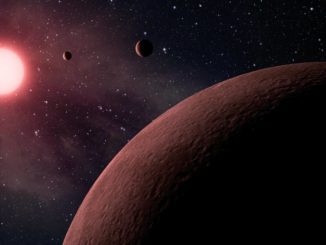
Scientists have published a catalog of exoplanet discoveries made by NASA’s Kepler space telescope, identifying 219 previously-unknown planet candidates circling stars elsewhere in the galaxy, including 10 would-be worlds that appear to be about the same size of Earth with temperatures potentially hospitable for life.

A NASA instrument built to help astronomers learn about the structure and behaviour of neutron stars, super-dense stellar skeletons left behind by massive explosions, has been mounted to an observation post outside the International Space Station after delivery aboard a SpaceX supply ship earlier this month.


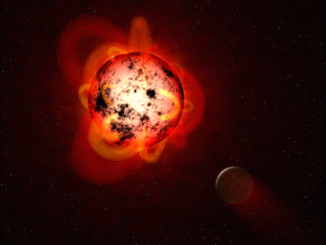
Cool dwarf stars are hot targets for exoplanet hunting right now. The discoveries of planets in the habitable zones of the TRAPPIST-1 and LHS 1140 systems, for example, suggest that Earth-sized worlds might circle billions of red dwarf stars, the most common type of star in our galaxy. But, like our own sun, many of these stars erupt with intense flares. Are red dwarfs really as friendly to life as they appear, or do these flares make the surfaces of any orbiting planets inhospitable?
© 2026 Nebula Press Ltd