News

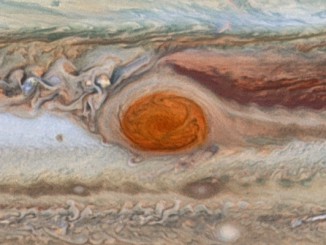
Hubble portrait captures changes in Jupiter’s Great Red Spot

Scientists using the NASA/ESA Hubble Space Telescope have produced new maps of Jupiter that show the continuing changes in its famous Great Red Spot. The images also reveal a rare wave structure in the planet’s atmosphere that has not been seen for decades. This is the first in a series of annual portraits of the solar system’s outer planets which will help researchers study how they change over time.

News

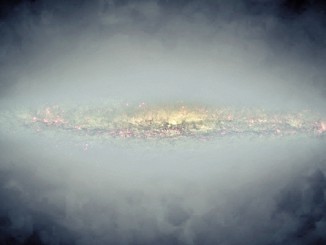
VLA reveals spectacular “haloes” of spiral galaxies

An international team of astronomers used the Karl G. Jansky Very Large Array (VLA) to investigate 35 edge-on spiral galaxies at distances from 11 million to 137 million light-years from Earth. The study has revealed that “haloes” of cosmic rays and magnetic fields above and below the galaxies’ discs are much more common than previously thought.

News

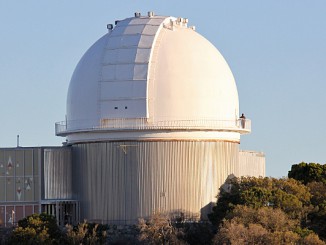
A sharp-eyed future for historic Kitt Peak telescope

The 2.1-metre telescope at Kitt Peak National Observatory will be transformed into the first dedicated adaptive optics (AO) observatory for astronomy. This system, named Robo-AO KP, will allow astronomers to study large numbers of astronomical objects in high resolution, spanning science from planetary to stellar, and exoplanetary to extragalactic.

News

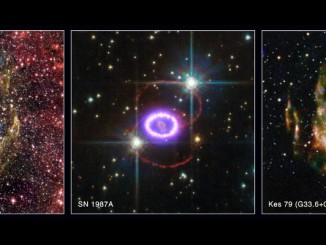
Banking X-ray data for the future

NASA’s Chandra X-ray Observatory has collected data for over sixteen years on thousands of different objects throughout the universe. Once the data is processed, all of the data goes into an archive and is available to the public. To celebrate American Archive Month, a collection of new images from the Chandra archive has just been released.

News

Understanding pulsating aurorae

Thanks to a lucky conjunction of two satellites, a ground-based array of all-sky cameras, and some spectacular aurorae boreales, researchers have uncovered evidence for an unexpected role that electrons have in creating the dancing aurorae. Though humans have been seeing aurorae for thousands of years, we have only recently begun to understand what causes them.

News

Exoplanet anniversary: from zero to thousands in 20 years

On 6 October 1995, astronomers started a revolution with the discovery of 51 Pegasi b — the first planet found orbiting a Sun-like star beyond our solar system. As we celebrate the 20th anniversary of that momentous discovery, the current total of known exoplanets stands at 5,596. More than 1,000 of these were discovered by NASA’s Kepler mission.

News

Peeking into our galaxy’s stellar nursery

Astronomers have long turned their telescopes to the wide swaths of interstellar medium to get a look at the formation and birth of stars. A team of international researchers has just released the most comprehensive images anyone has ever seen of the Milky Way’s cold interstellar gas clouds where new stars and solar systems are being born.