News

Galaxy’s cannibalistic snacking habits revealed

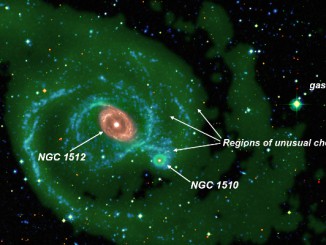
A team of Australian and Spanish astronomers have caught a greedy galaxy gobbling on its neighbours and leaving crumbs of evidence about its dietary past. Their successful and novel approach to investigating how galaxies grow is being used in a new program to further refine the best models of galaxy evolution.

Picture This

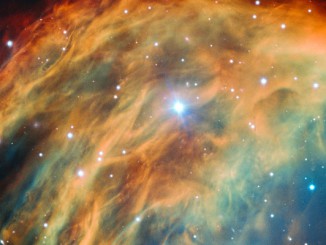
The dreadful beauty of the Medusa Nebula

Astronomers using ESO’s Very Large Telescope in Chile have captured the most detailed image ever taken of the Medusa Nebula in the constellation of Gemini. As the star at the heart of this nebula made its transition into retirement, it shed its outer layers into space, forming this colourful cloud.

News

Supernova observed colliding with its companion star

Type Ia supernovae are violent stellar explosions that shine as some of the brightest objects in the universe, but there are still many mysteries surrounding their origin. Now a team of astronomers have witnessed a supernova smashing into a nearby star, shocking it, and creating an ultraviolet glow that reveals the size of the companion.

Observing

See ringed planet Saturn at its best

Often referred to as the Jewel of the Solar System, Saturn reaches opposition on May 23rd and is currently best placed for observation during 2015. Despite the planet’s southerly declination, its glorious ring system is favourably tipped in our direction with the northern hemisphere on show.

News

Briny seas maybe lurking on Europa

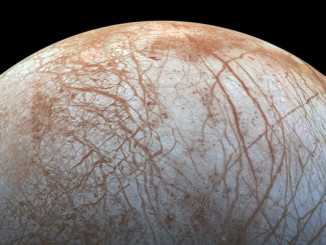
A decade-long question about the nature of dark spots on Europa’s surface has potentially been solved, with scientists suggesting that these spots are likely signs of irradiated sea salt from a subsurface ocean, deposited onto the surface through interactions with its rocky seafloor. If this is indeed the case, then these findings are an important consideration for assessing the habitability of the planet and whether it could support life or not.