
Picture This


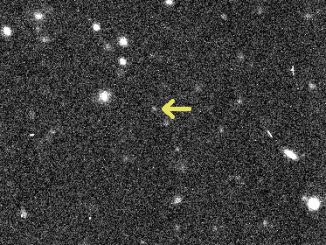
The search for distant solar system objects has found two more small worlds far outside the orbit of Neptune, beyond the Kuiper Belt. The new objects, 2014 FZ71 and 2015 FJ345, are in resonance with Neptune’s orbit, implying that these worlds either have interacted with Neptune in the past or are continuing to do so.
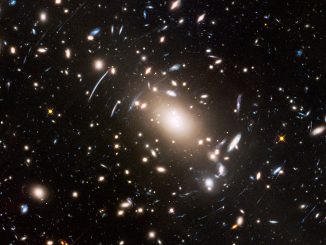
The TV series “Star Trek” captured the public’s imagination with the signature phrase, “To boldly go where no one has gone before.” The NASA/ESA Hubble Space Telescope doesn’t “boldly go” deep into space, but it is “boldly peering” deeper into the universe than ever before to explore the warping of space and time and uncover some of the farthest objects ever seen.
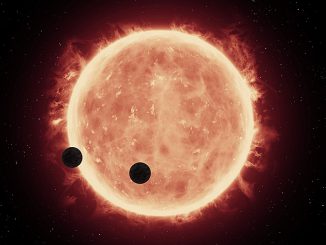
Astronomers using the NASA/ESA Hubble Space Telescope have conducted the first search for atmospheres around temperate, Earth-sized planets beyond our solar system. They found indications that increase the chances of habitability on two exoplanets known as TRAPPIST-1b and TRAPPIST-1c orbiting a red dwarf star approximately 40 light-years away.
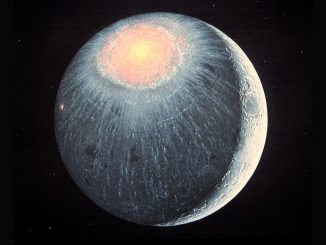
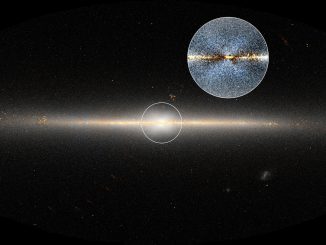
Astronomers have uncovered the strongest evidence yet that an enormous X-shaped structure made of stars lies within the central bulge of the Milky Way. Previous computer models, observations of other galaxies, and observations of our own Galaxy have suggested that the X-shaped structure existed, but no one had observed it directly.
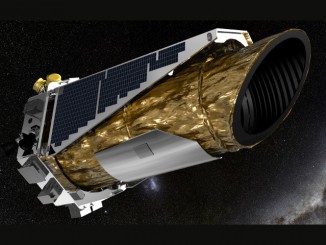
More than 100 confirmed exoplanets — the biggest haul of worlds uncovered by the stabilised and repurposed Kepler space telescope in its K2 mission — is reported by an international science team led by the University of Arizona. Excitingly, the new population includes many worlds that could be rocky and cool enough to potentially support life.
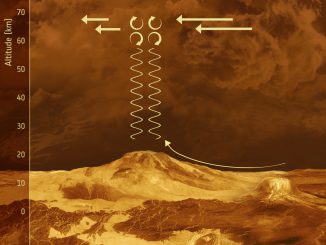
Using observations from ESA’s Venus Express satellite, scientists have shown for the first time how weather patterns seen in Venus’ thick cloud layers are directly linked to the topography of the surface below. Rather than acting as a barrier to our observations, Venus’ clouds may offer insight into what lies beneath.
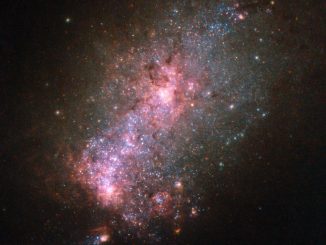
This NASA/ESA Hubble Space Telescope image reveals the vibrant core of the galaxy NGC 3125, approximately 50 million light-years away. Discovered by John Herschel in 1835, NGC 3125 is a great example of a starburst galaxy — a galaxy in which unusually high numbers of new stars are forming, springing to life within intensely hot clouds of gas.
© 2019 Pole Star Publications Limited