
Picture This

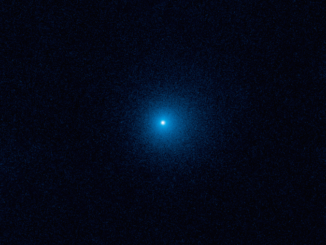
NASA’s Hubble Space Telescope has photographed the farthest active inbound comet ever seen, at a whopping distance of 1.5 billion miles from the Sun. Slightly warmed by the remote Sun, it has already begun to develop an 80,000-mile-wide fuzzy cloud of dust, called a coma, enveloping a tiny, solid nucleus of frozen gas and dust.
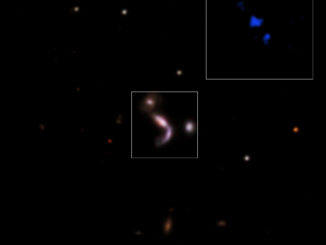
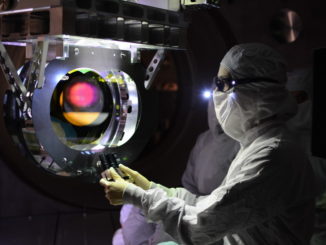
The LIGO Scientific Collaboration and the Virgo collaboration report the first joint detection of gravitational waves with both the LIGO and Virgo detectors. This is the fourth announced detection of a binary black hole system and the first significant gravitational-wave signal recorded by the Virgo detector, and highlights the scientific potential of a three-detector network of gravitational-wave detectors.


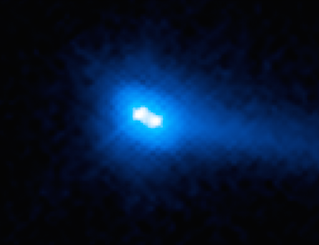
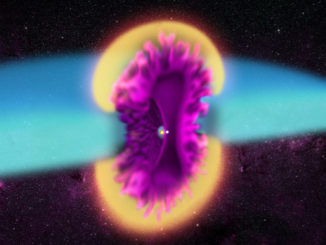
For decades, astronomers have known about irregular outbursts from the double star system V745 Sco, which is located about 25,000 light-years from Earth. Astronomers were caught by surprise when previous outbursts from this system were seen in 1937 and 1989. When the system erupted on February 6, 2014, however, scientists were ready to observe the event with a suite of telescopes including NASA’s Chandra X-ray Observatory.


© 2019 Pole Star Publications Limited