News

Study teams comb through NASA’s wish list for new telescope

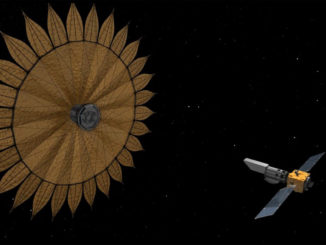
Scientists outlining four concepts for a powerful new space telescope that could launch in the 2030s this week said improvements in optics, detectors and access to huge new rockets like NASA’s Space Launch System could revolutionize the way astronomers observe potentially habitable planets, black holes, and the earliest galaxies in the Universe.
Picture This

Chandra peers into a nurturing cloud

In the context of space, the term ‘cloud’ can mean something rather different from the fluffy white collections of water in the sky or a way to store data or process information. Giant molecular clouds are vast cosmic objects, composed primarily of hydrogen molecules and helium atoms, where new stars and planets are born. These clouds can contain more mass than a million Suns, and stretch across hundreds of light-years.

Observing

Mercury’s prominent evening show under southern skies

Mercury is generally something of a challenge to observe, but the run-up to a particularly favourable easterly elongation occurring on 30 July provides ample opportunities for locating the innermost planet in the evening sky — particularly from the Southern Hemisphere, where a prominent celestial marker in the form of a 2-day-old Moon passes close by on 25  July.