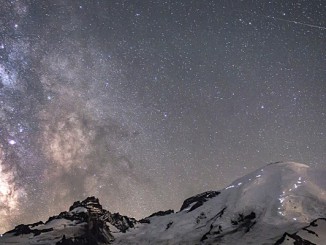
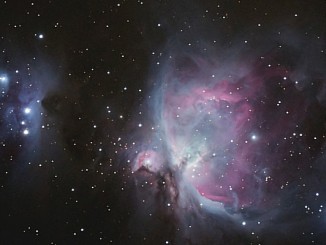
Over the coming weeks we will feature, in no particular order, each of the final 16 selected images and winners will be announced by Royal Museums Greenwich on 17 September. The winning images are to be showcased at the Royal Observatory Greenwich in an exhibition opening 18 September.
Nomination number seven from the prestigious Insight Astronomy Photographer of the Year competition, an annual celebration of the most beautiful and spectacular visions of the cosmos by astrophotographers worldwide. The 2015 competition received 2700 spectacular entries from over 60 countries and the winners will be announced 17 September.
David Tolliday’s stunning image of the Orion and Running Man Nebulae was captured on his first night’s attempt at astrophotography — winning image of The Sir Patrick Moore Prize for Best Newcomer category in the Insight Astronomy Photographer of the Year competition 2015.
This image was captured from Sunset Peak, Lantau Island, Hong Kong by astrophotographer Chap Him Wong. Above the peak covered with gold and silver grass, the tantalising sky reveals star trails and the Milky Way beyond — winning image of the People & Space category in the Insight Astronomy Photographer of the Year competition 2015.