
A realtime animation of the European Space Agency’s ExoMars Schiaparelli module entering and descending through the atmosphere to land on Mars. The animation starts when the lander enters the atmosphere at an altitude of 121 km at 14:42 GMT. In six minutes it will use a heatshield, parachute and thrusters to brake from 21,000 km/h to a near standstill 2 metres above the surface, where a crushable structure on its underside will absorb the final shock.
Observing
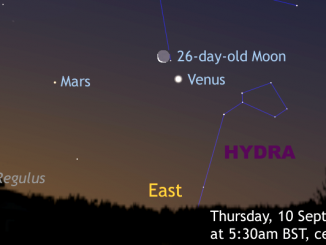
See the Moon & Venus get close in the pre-dawn sky
As dawn creeps across Western Europe on the morning of Thursday, 10 September, a close conjunction of the two brightest objects in the nighttime sky is taking place low in the east an hour before sunrise. So, set your alarm for 5:30am in the UK to see a beautiful juxtaposition of a 26-day-old waning crescent Moon and dazzling planet Venus in the twilight.
News
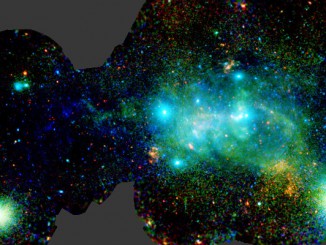
The Milky Way’s tumultuous heart revealed in X-rays
A newly released image from the ESA’s XMM-Newton X-ray satellite observatory gives us a unprecedented look at the intense processes taking place at the centre of our Milky Way galaxy. The new study, which spans a thousand light-years, is a compilation of one and a half months of monitoring, revealing the powerful remnants of dead stars and their mighty action on the surrounding gas.
Observing
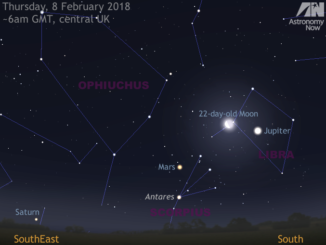
See the Moon’s dawn encounters with Jupiter, Mars and Saturn, 7–11 February
Set your alarm for 6am GMT if you wish to see three naked-eye planets in the UK dawn sky this week. Find a location that offers an unobstructed view of the horizon from southeast to south and let the waning Moon be your guide to locating Jupiter, Mars and Saturn on successive mornings from 7 to 11 February.