Observing

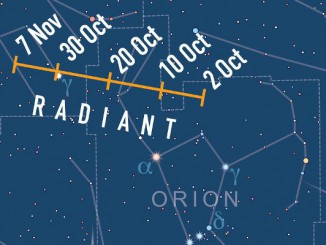
See the Orionid meteor shower peak 21-23 October

The highlight of October for meteor observers is the Orionid meteor shower, which occurs when the Earth encounters the debris stream of Halley’s Comet. With a broad maximum 21-23 October, peak rates are typically about a quarter of those seen for the Perseids of August. A good percentage of Orionids are bright and leave persistent trains.
News

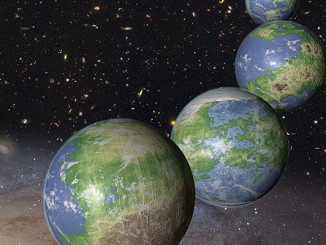
Theoretical study concludes most Earth-like worlds have yet to be born

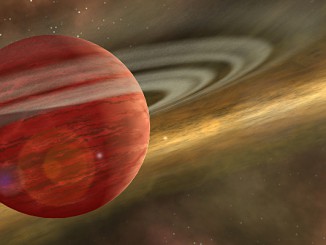
Earth came early to the party in the evolving universe. According to a new theoretical study, when our solar system was born 4.6 billion years ago only eight percent of the potentially habitable planets that will ever form in the universe existed. And, the party won’t be over when the Sun burns out in another 6 billion years. The bulk of those planets — 92 percent — have yet to be born.

Equipment

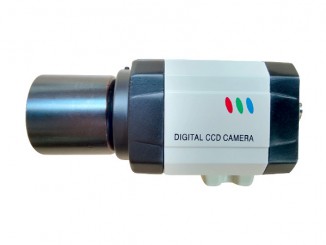
Astro-Video Systems DSO-1 camera

Are you looking for something to bring the wow factor back to your public viewing sessions, or a means to observe in comfort out of the cold? The sub-£100 Astro-Video Systems DSO-1 camera promises near realtime colour imaging of deep-sky objects and high-resolution planetary imaging with modest telescopes. Does it deliver? Ade Ashford finds out.

News

The minimum mass of a proto-solar system disc

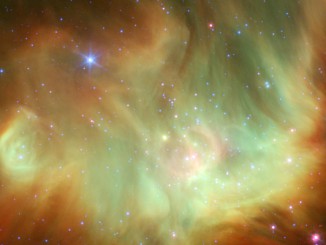
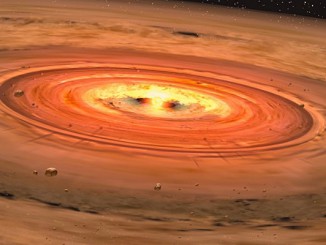
Astronomers studying the birth of planetary systems in the young (about 2-3 million years old) star forming region IC348 in Perseus as seen by the infrared cameras onboard the Spitzer Space Telescope have found thirteen stars in this complex with detectable discs, none of which is as massive as our early solar system’s disc.

News

Zircon study questions dates for cataclysms on early Moon and Earth

Phenomenally durable crystals called zircons are used to date some of the earliest and most dramatic cataclysms of the solar system, such as the late heavy bombardment that created hellish surface conditions on the young Earth and Moon about 4 billion years ago. Now a study of zircons from a gigantic meteorite impact in South Africa casts doubt on the methods used to date lunar impacts.

News

Large solar storms ‘dodge’ detection systems on Earth

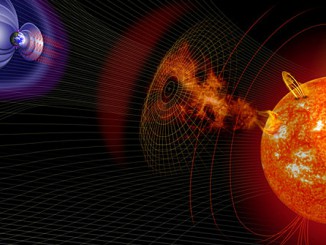
According to observations from the Tihany Magnetic Observatory in Hungary, the indices used by scientists to assess the Sun’s geomagnetic perturbations to the Earth are unable to detect some of these events, which could put both power supply and communication networks at risk. The Tihany Magnetic Observatory registered a solar storm similar to the largest one ever recorded while other observatories were completely unaware of the event.

Equipment

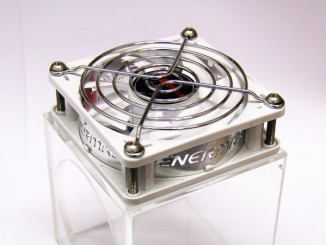
Geoptik CCD cooling fan

CCDs are incredible devices, gobbling photons that have travelled the vastness of space with great efficiency. Their Achilles heel is to also accept spurious signals from the immediate vicinity — within their own traitorous circuitry. Steve Ringwood investigates a CCD cooling chamber that will reduce a camera’s noise and increase its efficiency for both daytime and nocturnal imaging.

News

Pluto’s puzzling patterns and pits

It seems that the more we see of Pluto, the more fascinating it gets. This latest image, from the heart of Pluto’s heart feature, shows the plains’ enigmatic cellular pattern as well as unusual clusters of small pits and troughs. Adding to the intrigue is that even at this resolution of 250 metres, no impact craters are seen, testifying to the region’s extreme geologic youth.