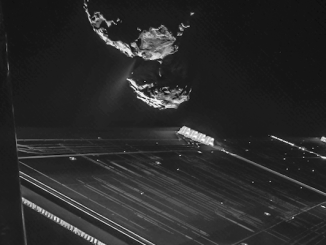
ESA flight director Andrea Accomazzo, says the Philae lander is ready to separate from the Rosetta mothership and touchdown on comet 67P/Churyumov–Gerasimenko.
14 October 2026

Latest News
- [ 29 September 2026 ] Happy New Year, Mars! The Red Planet is turning 39 News
- [ 8 September 2026 ] 3I/ATLAS was born in the deep freeze News
- [ 30 August 2026 ] Roman Space Telescope launches on mission to survey the Universe News
- [ 24 August 2026 ] JWST’s ‘impossible’ early galaxies may be even more massive than we thought News
- [ 7 August 2026 ] How to observe the 12 August 2026 solar eclipse Eclipse

© 2026 Nebula Press Ltd