The United Nations has declared 2015 the International Year of Light, and to recognise the start of the event, the Chandra X-ray Center is releasing a set of images that combine data from telescopes tuned to different wavelengths of light.
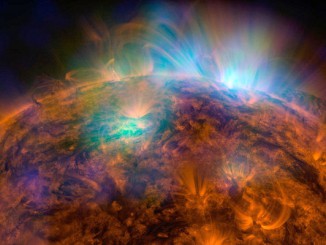
Designed to study black holes, supernova remnants and other extreme objects beyond our Solar System, NASA’s Nuclear Spectroscopic Telescope Array (NuSTAR) has captured the most sensitive portrait of the Sun ever taken in high-energy X-rays.
EPFL scientists have picked up an atypical photon emission in X-rays coming from space, and say it could be evidence for the existence of a particle of dark matter. If confirmed, it could open up new perspectives in cosmology.
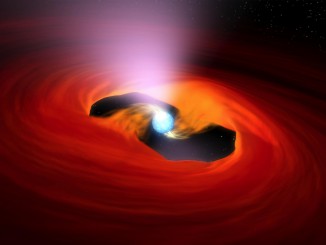
Blinding bursts of X-rays are coming from a supercharged pulsar lying in a galaxy 10 million light years away, more powerful than any pulsar ever seen before. The discovery, by NASA’s Nuclear Spectroscopic Telescope Array, or NuSTAR, challenges what we thought we knew about these extreme objects.