
17 February 2026
Astronomy Now
  • Home
  • The Magazine
    • About
    • Current Issue
    • Subscribe
    • Renew Subscription
  • AstroFest 2026
  • News
  • Observing
    • UK Sky Chart
    • Almanac
    • Scope Calc
    • DSLR Calc
  • Reviews
    • Equipment
    • Book Reviews
  • Spaceflight Now
  • Shop
  • Contact Us
    • Subscriptions
    • Your Views
    • Ask Astronomy Now
    • Editorial
    • Advertising
    • AstroListings
Latest News
  • [ 26 January 2026 ] Dr Allan Chapman (1946-2026) News
  • [ 16 January 2026 ] Potentially bright ‘sungrazing’ comet discovered News
  • [ 17 December 2025 ] Thank you from the editor News
  • [ 25 October 2025 ] Hubble revisits a cosmic yardstick News
  • [ 21 October 2025 ] Europe’s planet hunting spacecraft complete and ready for final testing News
  • Facebook
  • Twitter
  • LinkedIn

University of Georgia

News

Most volcanic activity on Mercury stopped about 3.5 billion years ago

7 August 2016 Astronomy Now

New research from North Carolina State University finds that major volcanic activity on the innermost planet most likely ended about 3.5 billion years ago — in stark contrast to the volcanic ages found for Venus, Mars and Earth. These findings add insight into the geological evolution of Mercury and what happens when rocky planets cool and contract.
News

Dark energy explained by relativistic time dilation?

5 January 2015 Astronomy Now

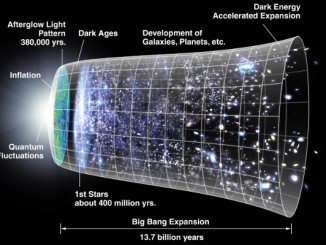
Dark energy is proposed to drive the accelerated expansion of the universe, but a new study suggests that changing how we think about time dilation in relation to gravity as predicted by Albert Einstein can provide an alternate explanation.

Astronomy Now NewsAlert

* indicates required
Which elements of Astronomy interest you?

News Headlines

  • Dr Allan Chapman (1946-2026)
    26 January 2026
  • Potentially bright ‘sungrazing’ comet discovered
    16 January 2026
  • Thank you from the editor
    17 December 2025
  • Hubble revisits a cosmic yardstick
    25 October 2025
  • Europe’s planet hunting spacecraft complete and ready for final testing
    21 October 2025

© 2019 Pole Star Publications Limited

Astronomy Now