
News
Intense storms batter Saturn’s largest moon, scientists report
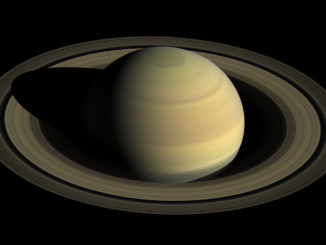
Titan, the largest of Saturn’s more than 60 moons, has surprisingly intense rainstorms, according to research by a team of UCLA planetary scientists and geologists. Although the storms are relatively rare — they occur less than once per Titan year, which is 29 and a half Earth years — they occur much more frequently than the scientists expected.
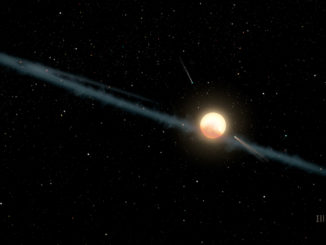
Mysterious dimming of Tabby’s Star may be caused by dust
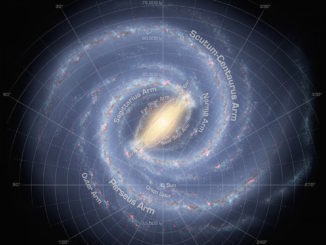
One of the most mysterious stellar objects may be revealing some of its secrets at last. Called KIC 8462852, also known as Boyajian’s Star, or Tabby’s Star, the object has experienced unusual dips in brightness — NASA’s Kepler space telescope even observed dimming of up to 20 percent over a matter of days. In addition, the star has had much subtler but longer-term enigmatic dimming trends, with one continuing today.
JWST launch slips to early 2019
Extra testing of the James Webb Space Telescope and delays in assembling the powerful observatory will push back the $10 billion mission’s launch by at least six months to early 2019, officials announced last week as the telescope successfully completed an extensive performance test inside a cryogenic vacuum chamber in Houston.
Hubble observes the farthest active inbound comet yet seen
NASA’s Hubble Space Telescope has photographed the farthest active inbound comet ever seen, at a whopping distance of 1.5 billion miles from the Sun. Slightly warmed by the remote Sun, it has already begun to develop an 80,000-mile-wide fuzzy cloud of dust, called a coma, enveloping a tiny, solid nucleus of frozen gas and dust.