
12 June 2026
Astronomy Now
  • Home
  • The Magazine
    • About
    • Current Issue
    • Subscribe
    • Renew Subscription
  • AstroFest 2026
  • News
  • Observing
    • UK Sky Chart
    • Almanac
    • Scope Calc
    • DSLR Calc
  • Reviews
    • Equipment
    • Book Reviews
  • Spaceflight Now
  • Shop
  • Contact Us
    • Subscriptions
    • Your Views
    • Ask Astronomy Now
    • Editorial
    • Advertising
    • AstroListings
Latest News
  • [ 10 June 2026 ] Caught in the act: the wind that could kill a galaxy News
  • [ 4 June 2026 ] Europe’s Mars rover may land in the remains of a vast ancient water system News
  • [ 14 April 2026 ] Moon dust preserves record of life’s building blocks News
  • [ 11 April 2026 ] Dark matter may come in multiple forms, new model suggests News
  • [ 2 April 2026 ] Witness to history: Artemis II, lunar exploration and hope News
  • Facebook
  • Twitter
  • LinkedIn

Professor Mark Sims on the discovery that Beagle 2 made it to the surface

16 January 2015 Astronomy Now

Professor Mark Sims of Leicester University speaks to Astronomy Now’s Keith Cooper on the discovery that Beagle 2 made it to the surface on Christmas Day 2003.
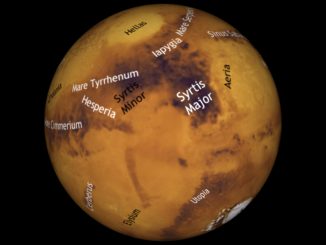
Read our full story on the new images of Beagle 2.

  • Beagle 2
  • Mars

Related Articles

Observing

See the Moon’s midnight rendezvous with Mars and Saturn

12 June 2016 Ade Ashford

We may be losing Jupiter in the west at dusk, but two other planets are well placed in the late evening. Skywatchers in the UK and Western Europe should look low in the southern sky around 12am local time on 17, 18 and 19 June to see the waxing gibbous Moon in the vicinity of planets Mars and Saturn, plus first-magnitude star Antares in the constellation of Scorpius.

News

NASA’s InSight mission lands on Mars to study planet’s hidden interior

26 November 2018 Stephen Clark

NASA’s InSight spacecraft plunged into the rarefied atmosphere of Mars at a speed of more than 12,000 mph Monday and braked to a gentle touchdown, setting the stage for a two-year surface mission to probe the planet’s deep interior.

News

Early Mars bombardment likely enhanced its habitability

6 April 2016 Astronomy Now

Much of the action on Mars occurred during a period known as the Late Heavy Bombardment about 3.9 billion years ago. Large comets and asteroids raining down on the planet would have produced enough heat to melt subsurface ice, likely enhancing climate conditions enough to make Mars more conducive to life — at least for a time.

Latest Issue

Astronomy Now Newsletter

Join our mailing list.
* indicates required
Which elements of Astronomy interest you?

News Headlines

  • Caught in the act: the wind that could kill a galaxy
    10 June 2026
  • Europe’s Mars rover may land in the remains of a vast ancient water system
    4 June 2026
  • Moon dust preserves record of life’s building blocks
    14 April 2026
  • Dark matter may come in multiple forms, new model suggests
    11 April 2026
  • Witness to history: Artemis II, lunar exploration and hope
    2 April 2026

© 2026 Nebula Press Ltd

Astronomy Now