

|
|
|
   |
|
Orion breathes oxygen DR EMILY BALDWIN ASTRONOMY NOW Posted: 03 August 2011 
ESA's Herschel Space Observatory has made the first confirmed detection of oxygen molecules in space, in the star-forming factory of the Orion Nebula. 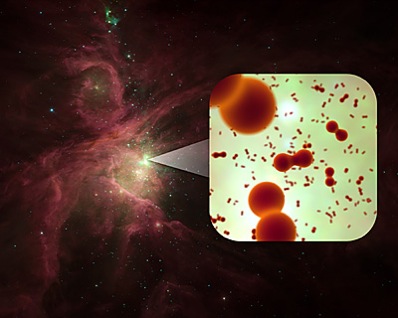 Herschel detected oxygen molecules in dense star-forming region in the Orion Nebula. Image: ESA/NASA/JPL-Caltech. Atoms of oxygen are common in space, but until now molecular oxygen – two oxygen atoms bound together – had eluded detections. Previous observations by NASA’s Submillimeter Wave Astronomy Satellite and Sweden’s Odin mission also found that the observed amount of atomic oxygen is much less than expected. “Oxygen is the third most common element in the Universe and its molecular form must be abundant in space,” says Bill Danchi, Herschel program scientist. “Herschel is proving a powerful tool to probe this unsolved mystery. The observatory gives astronomers an innovative tool to look at a whole new set of wavelengths where the tell-tale signature of oxygen may be hiding.” The team working on this project speculate that oxygen is locked up in water ice that coats tiny dust grains, and that the oxygen seen in the Orion Nebula appeared after starlight from newly forming stars warmed the grains, releasing water, which was converted into oxygen molecules. Using Herschel's HIFI far-infrared instrument the team found there to be one molecule of oxygen for every million hydrogen molecules, in the warmer regions of the nebula. Away from the heat of new-born stars, the oxygen molecules remain locked up in ice, invisible to detection. “This explains where some of the oxygen might be hiding,” says Paul Goldsmith, NASA’s Herschel project scientist. “But we didn’t find large amounts of it, and still don’t understand what is so special about the spots where we find it. The Universe still holds many secrets.” The hunt is now on for molecular oxygen in other star-forming regions. |
|
|
|
|