
News: March 2009
100 hours of astronomy
Another exciting Cornerstone Project of the International Year of Astronomy kicks off this week with 100 Hours of Astronomy - the largest single science public outreach event ever organised.
 FULL STORY FULL STORY
|
 |
 |
| |
Scientists fine-tune Hubble from the ground
A scientist at Rochester Institute of Technology has expanded the Hubble Space Telescope's capability without the need for new technology, by recalibrating existing instruments.
FULL STORY |
|
 |
| |
Mud volcanoes could bubble up life on Mars
According to scientists presenting their research at the Lunar and Planetary Science Conference this week, mud volcanism on Mars could provide a unique window into the astrobiological exploration of the red planet.
FULL STORY |
|
 |
| |
World's first Dark Sky Discovery Sites announced in Scotland
As part of International Year of Astronomy celebrations, the world's first two Dark Sky Discovery Sites have been announced in Scotland.
FULL STORY |
|
 |
| |
Erratic black hole
regulates itself
New analysis based on Chandra observations suggests that a special class of black hole may have a mechanism for shutting off their high speed jets and thus regulate the rate at which they grow.
FULL STORY |
|
 |
| |
Surprise recovery of meteorites from
Sudan fireball
Nearly 280 meteorite fragments from the high altitude explosion of asteroid 2008 TC3 have been recovered from the Nubian Desert, the first time meteorites have been directly connected to an asteroid observed to strike
the Earth.
FULL STORY |
|
 |
| |
Home computers to search for new pulsars
First there was SETI@Home, now there is Einstein@Home, an initiative that calls on the general public to donate computational time to searching for gravitational wave data that could help detect new pulsars.
FULL STORY |
|
 |
| |
Moon shadows signal approach of Saturn equinox
For the first time, Cassini has captured the shadows of the planet's moons on Saturn's broad expanse of rings as the majestic planet approaches equinox.
FULL STORY (INCLUDES ANIMATION) |
|
 |
| |
The latest theory-defying supernova
A star one hundred solar masses and one million times brighter than our Sun before it exploded, should not have self-destructed so early in its life, according to the fundamental theories of stellar evolution.
FULL STORY |
|
 |
| |
Giant waves twisting in solar atmosphere
For the first time scientists have detected giant waves twisting in the Sun's lower atmosphere, shedding light on the mystery of why the solar corona is hotter than the Sun's visible surface.
FULL STORY |
|
 |
| |
Another piece in the puzzle of Mars climate
According to new analysis of an eroded crater, a large scale depositional process has been at work in the equatorial regions of Mars that has implications for the climatic history of the planet.
FULL STORY |
|
 |
| |
Armada of telescopes capture blazar together
By taking advantage of telescopes in space and on the ground, astronomers have uncovered surprising changes in radiation emitted by an active galaxy.
FULL STORY |
|
 |
| |
Local She's an Astronomer event success
AN's website editor Emily Baldwin joined solar physicist Lucie Green and rocket scientist Mini Saaj at Surrey University to share their experiences as women in astronomy related careers to aspiring students.
FULL STORY |
|
 |
| |
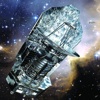
Planck and Herschel Exclusive Interviews
Astronomy Now talks to the scientists and engineers behind the Herschel and Planck missions, from Nobel Prize winner Robert Wilson, to ESA's David Southwood and Goran Pilbratt.
FULL STORY |
|
 |
| |
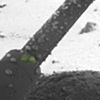
Evidence for liquid water on Mars today
Droplets of salty liquid water mixed with mud have been detected on a leg of the Mars Phoenix Lander, according to a new analysis that will be discussed at the Lunar and Planetary Science Conference in Houston next week.
FULL STORY |
|
 |
| |
Carbon and oxygen found around galactic bulge stars
The Spitzer Space Telescope has detected rare evidence for both carbon and oxygen in the dust surrounding stars in the centre of the Milky Way.
FULL STORY |
|
 |
| |
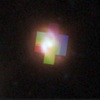
Unique 3D view of
distant galaxies
Using observations from the Hubble Space Telescope and ESO's Very Large Telescope, astronomers have obtained unique three-dimensional views of distant galaxies.
FULL STORY |
|
 |
| |
New evidence for dark matter around small galaxies
Astronomers studying the Perseus galaxy cluster with the Hubble Space Telescope have uncovered a new line of evidence that suggests galaxies are embedded in halos of dark matter.
FULL STORY |
|
 |
| |
Keck and Kepler to
join forces
Two of astronomy's most powerful planet hunters will join forces this summer to scrutinize distant Earths.
FULL STORY |
|
 |
| |
Mapping the Earth's gravity as never before
The most sophisticated Earth observation satellite will launch next week to map our planet's gravitational field with unprecedented resolution and accuracy.
FULL STORY |
|
 |
| |
Exclusive Interview:
David Koch
Astronomy Now's Keith Cooper talks in-depth to the deputy principal investigator of the Kepler mission to find out just how the spacecraft will go about the ambitious task of detecting Earth-like planets.
FULL STORY |
|
 |
| |
Kepler ready for launch
NASA's Kepler mission to seek out other Earth-like planets is on the launch pad and ready for liftoff from Cape Canaveral tonight.
FULL STORY |
|
 |
| |
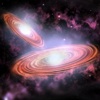
Binary black hole
system identified
Astronomers from the National Optical Astronomy Observatory (NOAO) in Arizona have found the best evidence yet for a pair of massive black holes orbiting around each other in a distant galaxy.
FULL STORY |
|
 |
| |
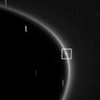
Saturn's newfound moon could be source of G ring
Discovered within Saturn's outer G ring is a faint moonlet, thought to be responsible for maintaining the ring and its single ring arc.
FULL STORY |
|
 |
| |
VLT reveals details of Pluto's atmosphere
A thin envelope of nitrogen and methane cloaks the dwarf planet Pluto in an atmosphere that is 50 degrees warmer than the surface, according to observations made with ESO's Very Large Telescope.
FULL STORY |
|
 |
| |
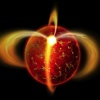
Geriatric pulsar still kicking
NASA's Chandra X-ray Observatory has spotted the oldest, most isolated pulsar ever detected in X-rays.
FULL STORY |
|
 |
|
| |
| |
| |
| |
|
| |
|
Back to latest news |
|



 Our latest 132-page Astronomy Now special edition is an extravaganza of astronomy for the year ahead, with a complete 30-page guide to observing the planets, moon, meteor showers, two solar eclipses, and the deep sky in 2010.
 A 100-page special edition from the creators of Astronomy Now magazine, The Grand Tour of the Universe takes readers from one end of the Universe to the other and, in doing so, asks the question "just how big is the Universe?"

 This special publication features the photography of British astro-imager Nik Szymanek and covers a range of photographic methods from basic to advanced. Beautiful pictures of the night sky can be obtained with a simple camera and tripod before tackling more difficult projects, such as guided astrophotography through the telescope and CCD imaging.
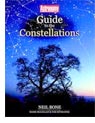 Astronomy Now presents
this 100-page, full-colour guide to the 68 constellations visible from the British
Isles by Neil Bone, the respected amateur astronomer and writer.
Astronomy Now presents
this 100-page, full-colour guide to the 68 constellations visible from the British
Isles by Neil Bone, the respected amateur astronomer and writer. Astronomy Now is pleased to announce the publication of Exploring Mars. The very best images of Mars taken by orbiting spacecraft and NASA's Spirit and Opportunity rovers fill up the 98 glossy pages of this special edition!