
News: July 2010
Brown dwarf in tight orbit around young Sun-like star
A very young brown dwarf star has been found in a tight orbit around a nearby Sun-like star.  READ MORE READ MORE
|
 |
 |
| |
Mystery of Titan's
dunes solved
Seasonal changes that temporarily reverse the wind patterns on Saturn's moon Titan explain the orientation of the moon's dune fields, a new report says. READ MORE
|
|
 |
| |
Brilliant star in a
colourful neighbourhood
Hailing from La Silla Observatory, ESO has released a new image of the noteworthy star WR22, nestled in the picturesque setting of the outer reaches of the Carina Nebula. READ MORE
|
|
 |
| |
Spitzer glimpses into
Milky Way outback
New images from the Spitzer Space Telescope survey GLIMPSE360 have revealed a treasure trove of gems scattered around the suburbs of the Milky Way, including some unexpectedly massive young stars.
READ MORE
|
|
 |
| |
Planets found around
dying star
Two pairs of gas giants locked in unusually tight orbital dances have been discovered around old, dying stars.
READ MORE
|
|
 |
| |
Closing in on the
Higgs boson
Scientists working at the US Department of Energy's Fermilab DZero and CDF projects have together narrowed down the mass range of the elusive Higgs boson particle.
READ MORE
|
|
 |
| |
Unique gamma-ray burst gives clues to formation
A team of astronomers from Kyoto University, the Tokyo Institute of Technology and the National Astronomical Observatory of Japan have identified a dark gamma-ray burst (GRB) which could explain the origin of these exotic objects.
READ MORE
|
|
 |
| |
First "buckyballs"
found in space
Ball-shaped carbon molecules nicknamed "buckyballs" have been found in space for the first time, 25 years after they were observed in a laboratory.
READ MORE
|
|
 |
| |
Superfast star had deadly black hole encounter
An unusual blue star, racing away from the Milky Way at 2.5 million kilometres per hour, was put on its path by an encounter with the supermassive black hole at the centre of our Galaxy, which resulted in one star being destroyed and another two merging.
READ MORE
|
|
 |
| |
Water found in
Apollo samples
Traces of water have been found locked up in minerals in the rocks returned from the Moon by Apollo astronauts forty years ago. READ MORE
|
|
 |
| |
Black hole flung
around twice
A giant black hole has been spun around twice, forcing a change in the orientation of its spin axis, according to new evidence gleaned from Chandra X-ray Observatory data. READ MORE
|
|
 |
| |
Giant star breaks all records
A star that weighed in at over 320 times more massive than our Sun when it was born has been discovered deep within the Tarantula Nebula in the Large Magellanic Cloud, confounding expectations of just how big monster stars can be. READ MORE
|
|
 |
| |
A new test for dark energy
An effort to detect more intergalactic hydrogen than ever before is creating a new opportunity to test the strength of dark energy – that is, the force that is causing the expansion of the Universe to accelerate – say astronomers using the world’s largest steerable radio telescope, the Robert C Byrd Green Bank Telescope in West Virginia, USA. READ MORE
|
|
 |
| |
The frugal alien's beacon
SETI searches for long-lasting interstellar messages may be a fruitless task, say astrophysicists James, Gregory and Dominic Benford, who together have come up with a new type of alien beacon that we should be searching for: a short, snappy and cost-effective pulse that cycles between worlds and may shine our way for a few seconds only once every few days, weeks or months. READ MORE
|
|
 |
| |
Saturn’s F-ring gets a fan
Looking very much like a concertina Chinese fan, Saturn’s F-ring sports intriguing dark ‘blades’ and bright steamers of ring material pulled out by the gravity of the ring’s shepherd moon, Prometheus, in these latest images from the Cassini spacecraft. READ MORE
|
|
 |
| |
WISE mission completes first look through Universe
The WISE infrared telescope finished surveying the universe Saturday, but its $320 million mission will continue until its funding and hydrogen coolant run out later this year. READ MORE
|
|
 |
| |
Hot planet grows a tail
A planet with a tail like a comet is slowly evaporating in the face of a wind of radiation from its parent star, according to brand new observations from the Hubble Space Telescope READ MORE
|
|
 |
| |
Lake levels change
on Titan
For the first time, the levels of liquid in Titan’s lakes have been found to fall and rise with the seasons, just like on Earth. READ MORE
|
|
 |
| |
Swift dazzled by
distant X-ray blast
A violent burst of X-rays from beyond the neighbourhood of the Milky Way temporarily blinded the sensors on the orbiting Swift satellite last month, reveal mission scientists. READ MORE
|
|
 |
| |
Rosetta visits mysterious asteroid to unlock its secrets
Europe's Rosetta spacecraft flew less than 2,000 miles from asteroid Lutetia Saturday, snapping pictures of the new world and collecting bonus science on a primitive relic of the solar system. READ MORE
|
|
 |
| |
Hubble stirs up cosmic brew
The latest offering from the Hubble Space Telescope presents a swirling cosmic brew studded with blistering hot young stars. READ MORE
|
|
 |
| |
Propellors spotted flying through Saturn’s rings
Mini-moons producing propellor-shaped wakes in Saturn’s rings, hundred of times larger than similar objects discovered in 2006, have been identified in the planet’s A-ring by NASA’s Cassini probe. READ MORE
|
|
 |
| |
Falling clouds solve
quasar puzzle
The mystery behind the origin of quasars – the brilliantly bright centres of distant galaxies – may have been solved by a group of New York astronomers who suggest that giant clouds of hydrogen gas falling onto the centres of galaxies are being consumed by the supermassive black holes lurking within. READ MORE
|
|
 |
| |
Solar eclipse at Easter Island
A spectacular total solar eclipse over the ancient statues of Easter Island is set to occur on 11 July, where those lucky enough to have made it to the Pacific will witness the last total eclipse to occur until November 2012. READ MORE
|
|
 |
| |
Planet found tugging
on transits
A brand new technique for finding exoplanets, which piggybacks on an already established method, has turned up its first discovery, a planet 15 times the mass of Earth orbiting the star WASP-3. It also promises to be able to find Earth-sized planets. READ MORE
|
|
 |
| |
Mini black hole packs powerful punch
Using ESO's Very Large Telescope to follow up on a NASA Chandra X-ray telescope observation, the most powerful pair of jets ever seen have been found bursting from a black hole of just a few solar masses. READ MORE
|
|
 |
| |
Star formation poised
in dark cosmic cloud
The calm before the storm: lurking within a mysterious dark cloud in the Milky Way lie hundreds of stellar cores on the cusps of igniting into massive stars. READ MORE
|
|
 |
| |
Hubble captures
stellar fireworks
Hubble's latest offering captures a spectacular fireworks display of stars bursting into life through colourful nebulous clouds of gas and dust. READ MORE
|
|
 |
| |
Scientists find dust inside Japan's asteroid capsule
The Japan Aerospace Exploration Agency announced Monday they found particles inside the Hayabusa mission's capsule that was supposed to scoop up a sample from the surface of asteroid Itokawa in 2005. READ MORE
|
|
 |
| |
Rosetta comet-chaser on target for asteroid Lutetia
Space scientists will be on the edge of their seats this Saturday as they wait for the first images to be received back from comet-chasing spacecraft Rosetta's rendezvous with her second asteroid, (21) Lutetia on 10 July. READ MORE
|
|
 |
| |
Planck unveils first all-sky map of Universe
The much anticipated first all-sky microwave map of the Universe from ESA's Planck mission has today been unveiled.
READ MORE
|
|
 |
| |
Herschel seeks out distant galaxies and quasars
The latest data release from ESA's Herschel Space Observatory offers fresh insight into the plethora of galaxies occupying the distant Universe. READ MORE
|
|
 |
| |
Astronaut Antonelli checks out latest Astronomy Now
Astronaut Tony Antonelli, pilot onboard Space Shuttle Atlantis' flight in May 2010, came to inspire a young audience at Tunbridge Wells Grammar School for Boys, and checked out the latest issue of Astronomy Now, too! READ MORE
|
|
 |
| |
ESO paints cosmic watercolour
Using the Wide Field Imager at the European Southern Observatory's La Silla Observatory, astronomers have painted a spectacular picture of the region around star R Coronae Australis. READ MORE
|
|
 |
| |
Leo's gas ring explained
by galaxy collision
The nature of a giant gas ring that loops around the Leo galaxy group has been deciphered as the remains of a violent galactic smash that took place over one billion years ago. READ MORE
|
|
 |
| |
| |
|
|
Back to latest news |
|



 Our latest 132-page Astronomy Now special edition is an extravaganza of astronomy for the year ahead, with a complete 30-page guide to observing the planets, moon, meteor showers, two solar eclipses, and the deep sky in 2010.
 A 100-page special edition from the creators of Astronomy Now magazine, The Grand Tour of the Universe takes readers from one end of the Universe to the other and, in doing so, asks the question "just how big is the Universe?"

 This special publication features the photography of British astro-imager Nik Szymanek and covers a range of photographic methods from basic to advanced. Beautiful pictures of the night sky can be obtained with a simple camera and tripod before tackling more difficult projects, such as guided astrophotography through the telescope and CCD imaging.
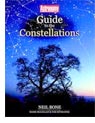 Astronomy Now presents
this 100-page, full-colour guide to the 68 constellations visible from the British
Isles by Neil Bone, the respected amateur astronomer and writer.
Astronomy Now presents
this 100-page, full-colour guide to the 68 constellations visible from the British
Isles by Neil Bone, the respected amateur astronomer and writer. Astronomy Now is pleased to announce the publication of Exploring Mars. The very best images of Mars taken by orbiting spacecraft and NASA's Spirit and Opportunity rovers fill up the 98 glossy pages of this special edition!