
News: April 2011
Massive supernovae
in dwarf galaxies
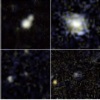
Astronomers at the California Institute of Technology in Pasadena using the Galaxy Evolution Explorer (GALEX) have observed some of the most powerful stellar explosions taking place in some of the smallest and faintest galaxies in the nearby Universe.  READ MORE READ MORE
|
 |
 |
| |
Big changes in Mars’ atmosphere
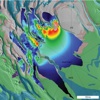
A massive reservoir of buried frozen carbon dioxide ice (dry ice) detected by the Mars Reconnaissance Orbiter (MRO) is intimately related to the mass of the red planet’s atmosphere as the planet tilts on its axis, which in turn could affect the stability of liquid water and the frequency and severity of dust storms. READ MORE
|
|
 |
| |
Star survives
companion’s explosion
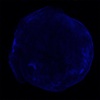
Astronomers studying the famous Tycho supernova remnant have found evidence that the dying star’s companion survived the blast. READ MORE
|
|
 |
| |

READ THE NAM BLOG
|
| |
Herschel digs the dust
on galaxies
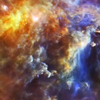
The Herschel Space Observatory has been used to help astronomers at Cardiff, Nottingham University and Max-Planck Institute for Astrophysics to understand the amount of dust in galaxies at varying distances. VIDEO REPORT
|
|
 |
| |
The Faulkes Telescope Project
Astronomy Now's Nick Howes meets Dr Sarah Roberts of the University of Glamorgan and Dill Faulkes, who set up the Faulkes Telescope Project to find out about work the Faulkes Project does with schoolchilden, and how schools and amateurs can sign up. WATCH NOW
|
|
 |
| |
What drives activity
on the Sun?
Astronomy Now's Nick Howes interviews solar scientist Dr Lucie Green of the Mullard Space Science Laboratory while at the RAS' National Astronomy Meeting. Dr Green discusses learning more about what drives activity on the Sun and upcoming missions to observe our nearest star.
WATCH NOW
|
|
 |
| |
Hot jupiter shocks astronomers
A team of astronomers at the University of St Andrews believe that Jupiter-like worlds around other stars push shock waves ahead of them, it was heard last week at the National Astronomy Meeting in Llandudno, North Wales.
READ MORE
|
|
 |
| |
Variable stars under the
gaze of STEREO
A collaboration of teams at the Open University, University of Central Lancashire and the Rutherford Appleton Laboratory have discovered 122 new eclipsing binary systems and observed hundreds more variable stars, thanks to a survey using NASA’s two STEREO solar satellites.
READ MORE
|
|
 |
| |
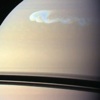
Saturn causes a storm
Astronomy Now's Keith Cooper talks to Oxford University's Dr Leigh Fletcher at the RAS' National Astronomy Meeting in Llandudno, Wales, about observations of a giant storm on Saturn that has erupted on the ringed planet.
VIDEO REPORT
|
|
 |
| |
X-ray outburst observed by school children
The study of an unusual double outburst of powerful radiation from million-degree hot gas in a X-ray binary star system has been assisted by five schools, four in the UK, collecting data with the two-metre Faulkes Telescope North in Hawaii.
VIDEO REPORT
|
|
 |
| |
Carbon monoxide discovered in Pluto’s atmosphere
A two decade-long search for carbon monoxide in Pluto’s atmosphere has finally met with success thanks to a UK-lead team using the 15-metre James Clerk Maxwell Telescope.
READ MORE
|
|
 |
| |
Was the Merry Monarch’s birth heralded by a supernova?
The mystery of the supernova that created the Cassiopeia A supernova remnant may have found a solution in the story of a daylight star seen at the time of the birth of King Charles II in 1630, astronomer Martin Lunn and historian Dr Lila Rakoczy have suggested at the Royal Astronomical Society’s National Astronomy Meeting in Llandudno, Wales.
READ MORE AND WATCH VIDEO
|
|
 |
| |
Astronomers tune in to exoplanets
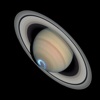
It is possible to tune into radio signals from aurorae to hunt down exoplanets, according to research presented at the Royal Astronomical Society’s National Astronomy Meeting held in Llandudno, North Wales.
READ MORE
|
|
 |
| |
Massive galaxies reigned in growth 7 billion years ago
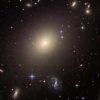
Evidence that the biggest galaxies in the Universe had halted their growth by the time the cosmos was half its current age is confounding our models of galaxy formation, according to new results revealed at the Royal Astronomical Society’s National Astronomy Meeting in Llandudno, Wales.
READ MORE
|
|
 |
| |
Black trees in a world of
two Suns?
Scientists studying what plant life might be like on an Earth-like planet with two or three suns have found that they might appear black or grey if the system is dominated by a red dwarf.
READ MORE
|
|
 |
| |
Solar sheaths make or break plasma eruptions
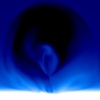
Our Sun is a violent object, regularly erupting material into space and occasionally into the path of the Earth, but understanding why these dramatic events take place remains a hot topic in solar physics. Dr Vasilis Archontis of the University of St Andrews thinks that clouds of plasma bound by the Sun’s magnetic field could hold the answer.
READ MORE
|
|
 |
| |
Planets around white dwarfs?
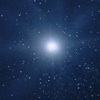
Astronomers are finding tantalising hints of planets around dead stars, it was revealed today at the Royal Astronomical Society’s National Astronomy Meeting in Llandudno, Wales.
READ MORE
|
|
 |
| |
Debris discs hold clues to solar system evolution
Complex debris discs of dust have been spotted around a multitude of stars, giving insights into the evolution of other solar systems, according to work described today at the Royal Astronomical Society’s National Astronomy Meeting (NAM) in Llandudno, Wales.
READ MORE
|
|
 |
| |
WISE delivers millions of galaxies, stars, asteroids
Astronomers across the globe can now sift through hundreds of millions of galaxies, stars and asteroids collected in the first bundle of data from NASA's Wide-field Infrared Survey Explorer (WISE) mission.
JPL NEWS RELEASE
|
|
 |
| |
Celestial fireworks from dying stars
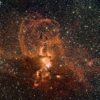
This image of the nebula NGC 3582, which was captured by the Wide Field Imager on the MPG/ESO 2.2-metre telescope at ESO’s La Silla Observatory in Chile, shows giant loops of gas bearing a striking resemblance to solar prominences.
ESO IMAGE RELEASE
|
|
 |
| |
Space shuttle retirement museums announced
Ending months of suspense, NASA Administrator Charles Bolden Tuesday announced the winners of a national competition to display the agency's three space shuttles after the fleet is retired and decommissioned later this year.
READ MORE
|
|
 |
| |
Stars born 200 million years after big bang
Astronomers using the Hubble and Spitzer space telescopes, and the W. M Keck Observatory, have found a young galaxy with stars that formed just 200 million years after the big bang.
READ MORE
|
|
 |
| |
Newly discovered asteroid is Earth's companion
A 200-400 metre wide asteroid first discovered by the Wide-field Infrared Survey Explorer (WISE) has been found by astronomers at Armagh Observatory to have been following Earth in its orbit for at least a quarter of a million years, and could represent a theorized but not-yet-seen population of asteroid.
READ MORE
|
|
 |
| |
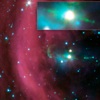
Identical jet lags behind twin
Two seemingly symmetrical jets shooting out knots of gas and dust from opposite sides of a growing star have now been found by the Spitzer Space Telescope to lag behind each other by four and a half years.
READ MORE
|
|
 |
| |
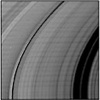
Comet collisions buckle planetary rings
Corrugated patterns seen in rings around Saturn and Jupiter could be imprints of past comet collisions, say astronomers studying data from Cassini, Galileo and New Horizons spacecraft. READ MORE
|
|
 |
| |
Nick Howes reports on the dot astronomy 3 conference
This three day conference at New College Oxford is unusual in the world of astronomy, in that whilst being primarily acamdemic driven, it focuses on new media and associated technologies and how they can best aid and assist the astronomical community. READ MORE
|
|
 |
| |
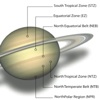
Saturn at opposition today
The overwhelming highlight in early April is the opposition of Saturn on 4 April. Tonight Saturn rises at 7.15pm BST, culminates at 1am and sets at 6.50am, giving around seven hours of observing time with Saturn more than 20 degrees above the horizon. Read more in our night sky guide. NIGHT SKY GUIDE
|
|
 |
| |
| |
|
|
Back to latest news |
|



 Our latest 132-page Astronomy Now special edition is an extravaganza of astronomy for the year ahead, with a complete 30-page guide to observing the planets, moon, meteor showers, two solar eclipses, and the deep sky in 2010.
 A 100-page special edition from the creators of Astronomy Now magazine, The Grand Tour of the Universe takes readers from one end of the Universe to the other and, in doing so, asks the question "just how big is the Universe?"

 This special publication features the photography of British astro-imager Nik Szymanek and covers a range of photographic methods from basic to advanced. Beautiful pictures of the night sky can be obtained with a simple camera and tripod before tackling more difficult projects, such as guided astrophotography through the telescope and CCD imaging.
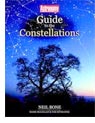 Astronomy Now presents
this 100-page, full-colour guide to the 68 constellations visible from the British
Isles by Neil Bone, the respected amateur astronomer and writer.
Astronomy Now presents
this 100-page, full-colour guide to the 68 constellations visible from the British
Isles by Neil Bone, the respected amateur astronomer and writer. Astronomy Now is pleased to announce the publication of Exploring Mars. The very best images of Mars taken by orbiting spacecraft and NASA's Spirit and Opportunity rovers fill up the 98 glossy pages of this special edition!